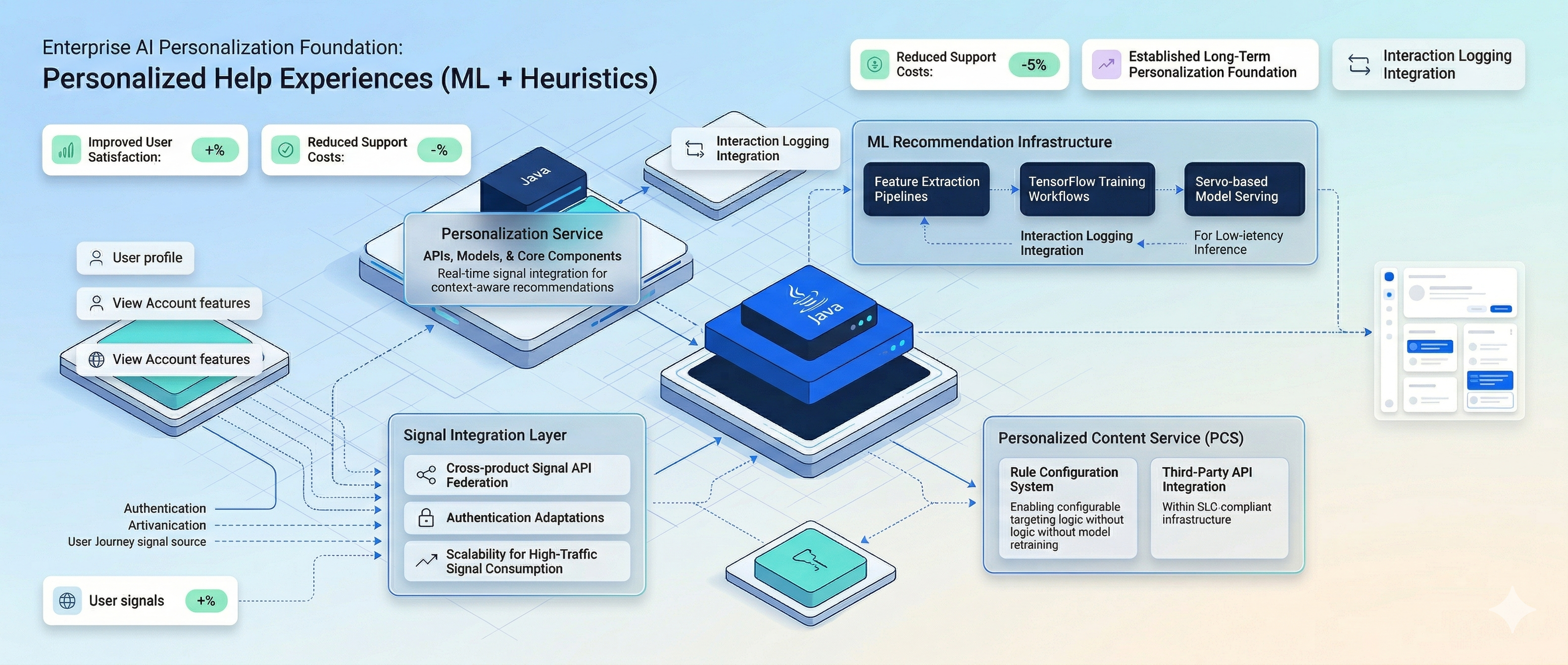
Personalized Help Experiences
Hybrid ML + heuristics infrastructure serving contextually relevant help to millions of users in real time.
personalized help daily
product surfaces
signal architecture
Replacing Generic Help with Context-Aware Personalization
Adityagen.ai built a real-time personalization platform that surfaces contextually relevant help to millions of users daily — eliminating unnecessary support contacts at scale.
Help surfaces across the product ecosystem were serving generic content — the same articles to every user regardless of context, history, or current issue. This created unnecessary support contacts, agent overhead, and user frustration when the answer was already available but never surfaced at the right moment.
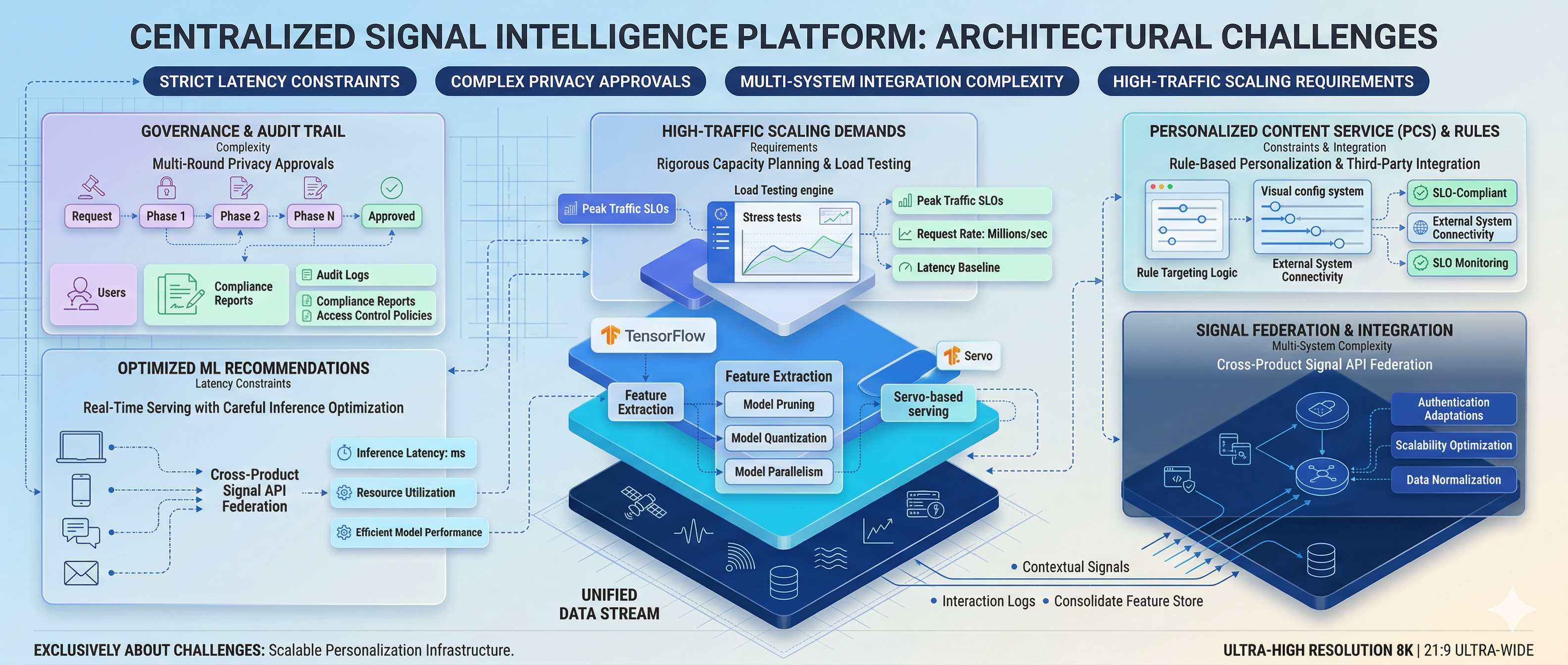
Building a personalization platform for help content presented distinct challenges: strict latency constraints on a real-time serving system, complex multi-round privacy approvals for cross-product signal access, and multi-system signal integration complexity across disparate product surfaces. High-traffic scaling requirements demanded rigorous capacity planning and load testing before every launch.
"Personalization at this scale isn't a model problem — it's an infrastructure problem. The model is the easy part."
Four-Component Personalization Platform
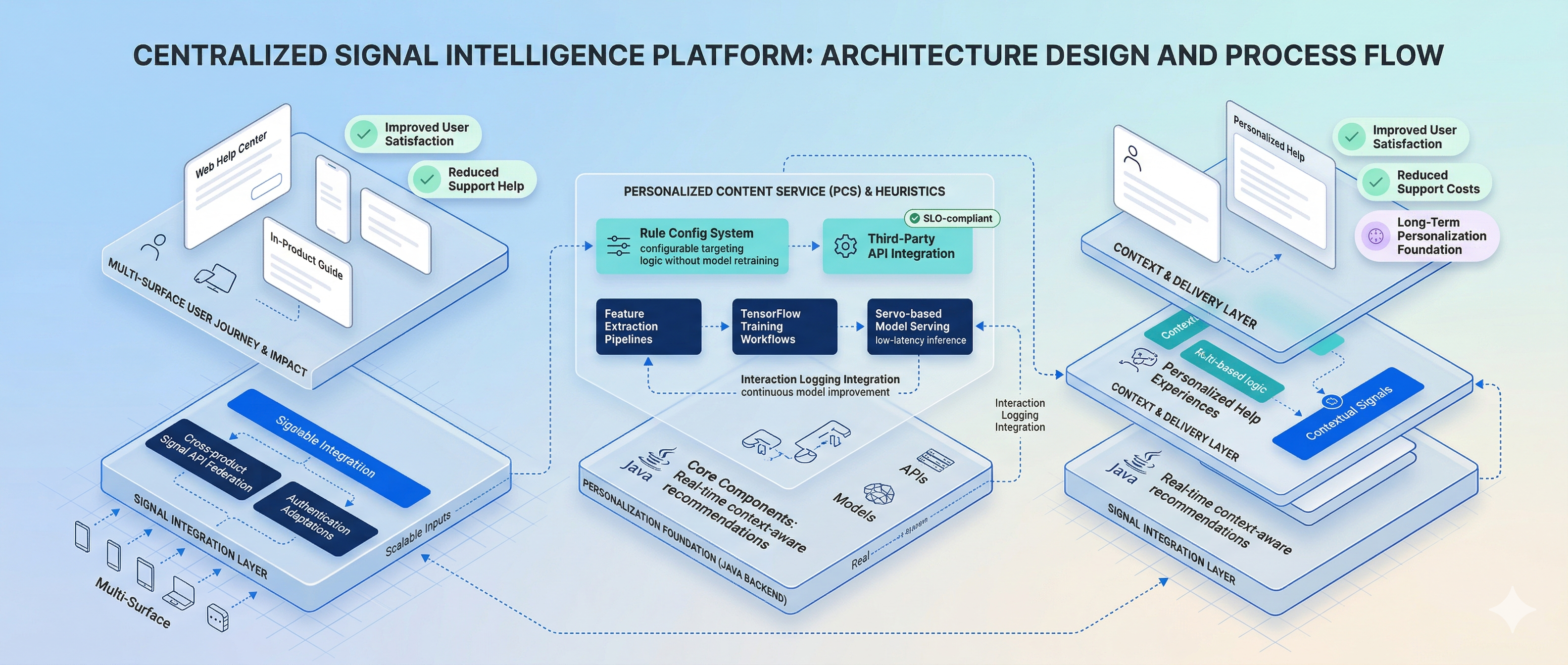
Better Help, Fewer Contacts, Lasting Foundation
relevant help daily
agent escalations
as signal library grew
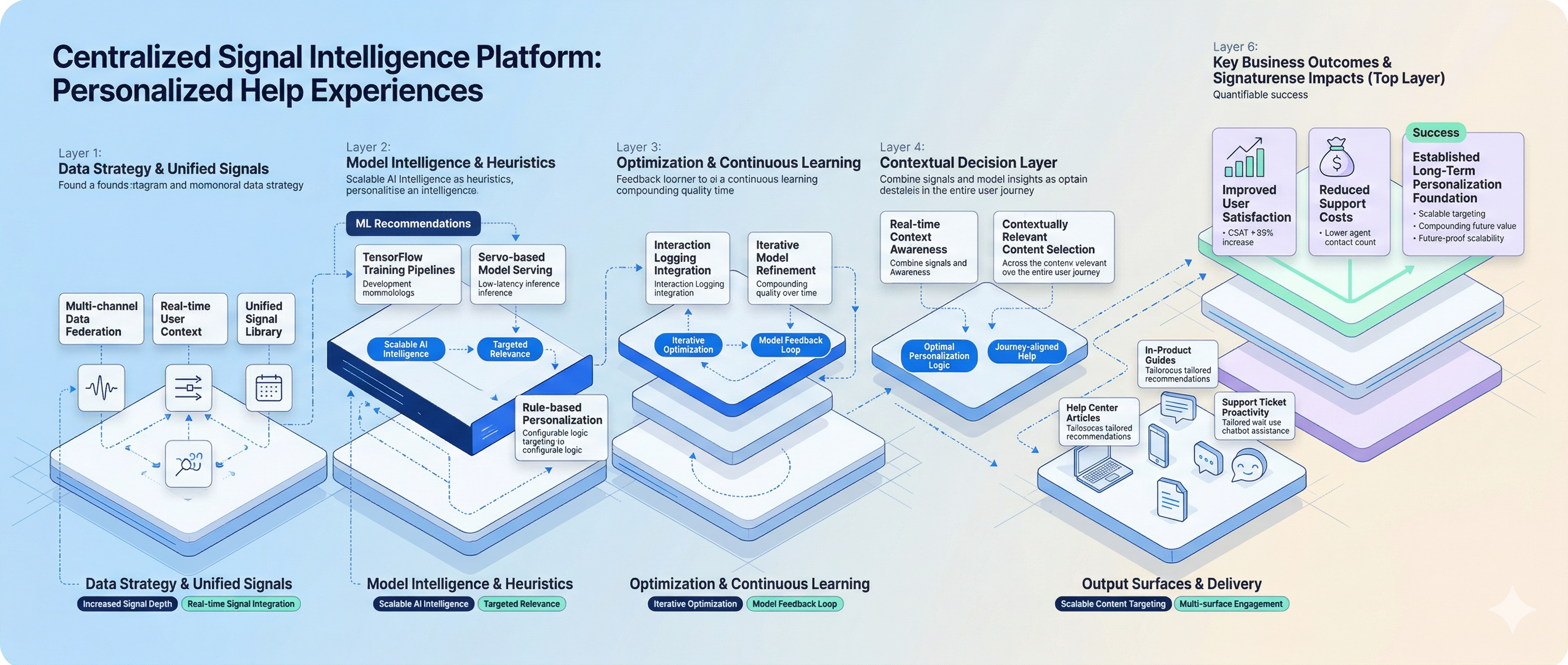
The platform improved user satisfaction by surfacing more relevant help content at the right moment in the user journey. Reduced support costs followed directly from fewer unnecessary contacts reaching live agents.
The long-term personalization foundation established by this project enabled scalable content targeting across channels, creating compounding value as the signal library and model quality improved over time.
Privacy, Architecture, and Engineering Leadership
- Drove the privacy design process, navigating regulatory and policy requirements to unblock cross-product signals
- Co-authored key architecture documents defining the personalization platform's long-term design
- Mentored junior engineers through build, testing, and production launch phases