Signal Metadata Repository
Home / Case Studies / Signal Metadata Repository
Enterprise AI Architecture
Project 02

Signal Metadata Repository

A centralized signal intelligence platform that became the data foundation for every ML model in the organization.

Company
Google
Year
2022–2023
Role
Platform Architect & Tech Lead
6 Layers
End-to-end signal
lifecycle platform
Cross-team
Signal discoverability
across all ML teams
Real-time
Quality monitoring
& alerting
The Challenge

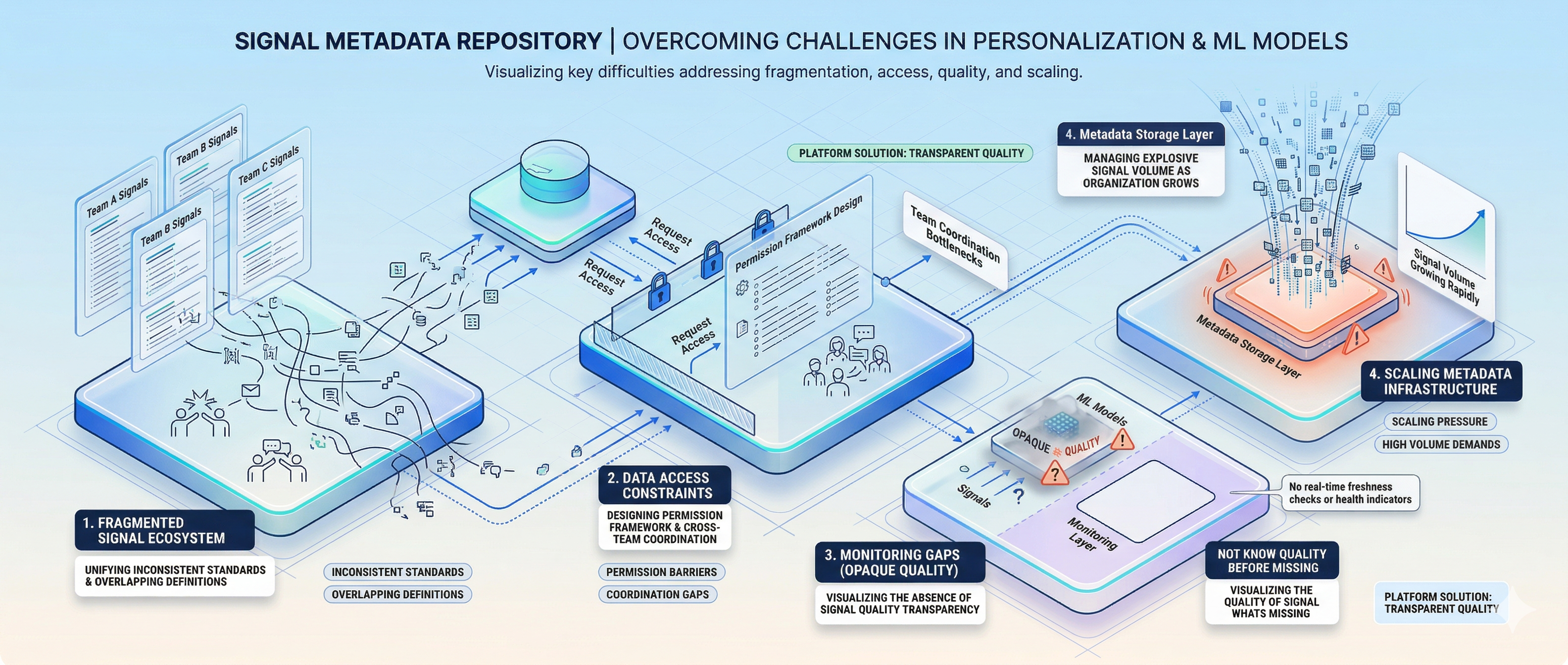
A Fragmented Signal Ecosystem Slowing Every ML Team
Signal Ecosystem Challenge

Adityagen.ai designed a unified ML signal governance platform that gave every data science team visibility into what signals exist, what they mean, and whether they can be trusted — at Google scale.

ML development across support systems was being slowed by a fragmented signal ecosystem — inconsistent standards, overlapping signal definitions, and no way to discover what signals already existed. Data scientists were recreating signals from scratch, production models were silently degrading from stale data, and there was no platform-level visibility into which signals were powering which models.

The core problem was institutional: without a centralized source of truth for signal metadata, every ML team was operating in isolation. This compounded across teams and projects until signal duplication, quality issues, and debugging overhead became a meaningful tax on engineering velocity.

"The fastest way to accelerate ML development isn't a better model — it's knowing exactly what data you already have and trusting it."

System Architecture

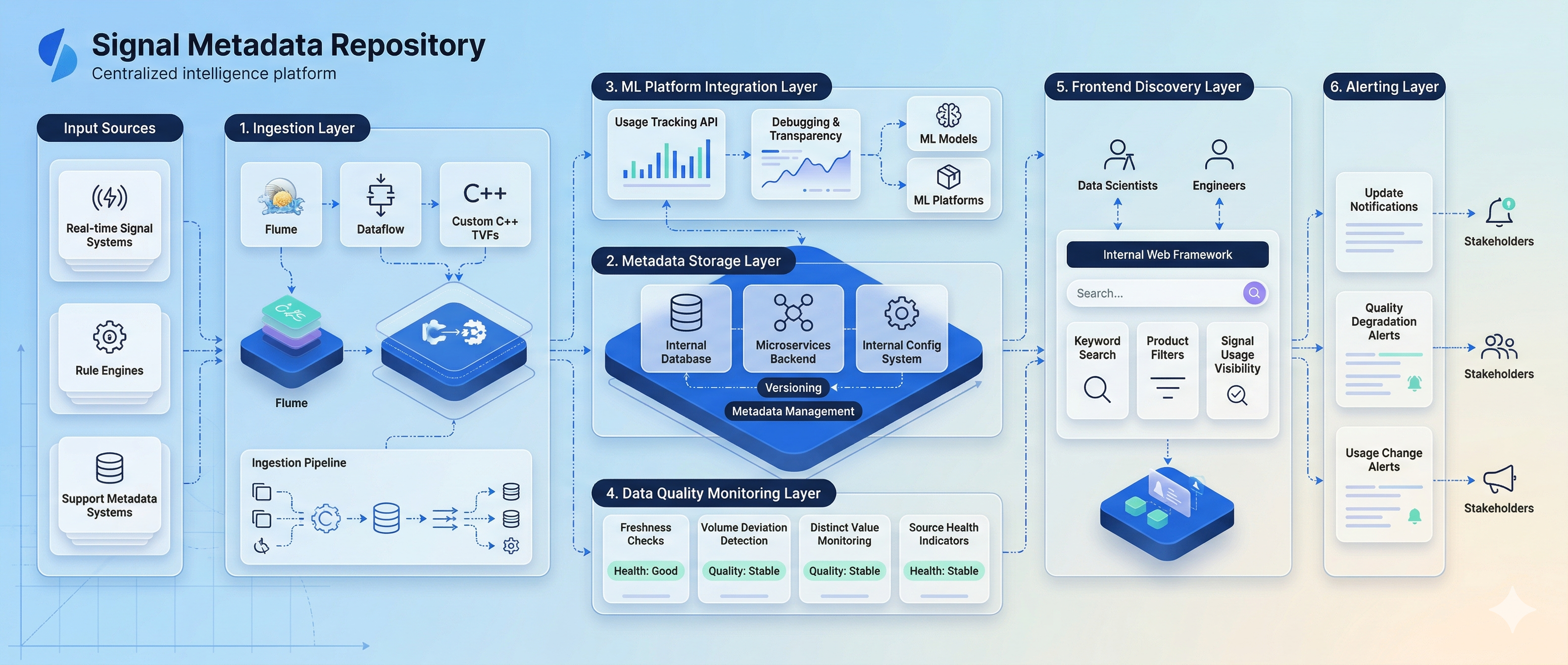
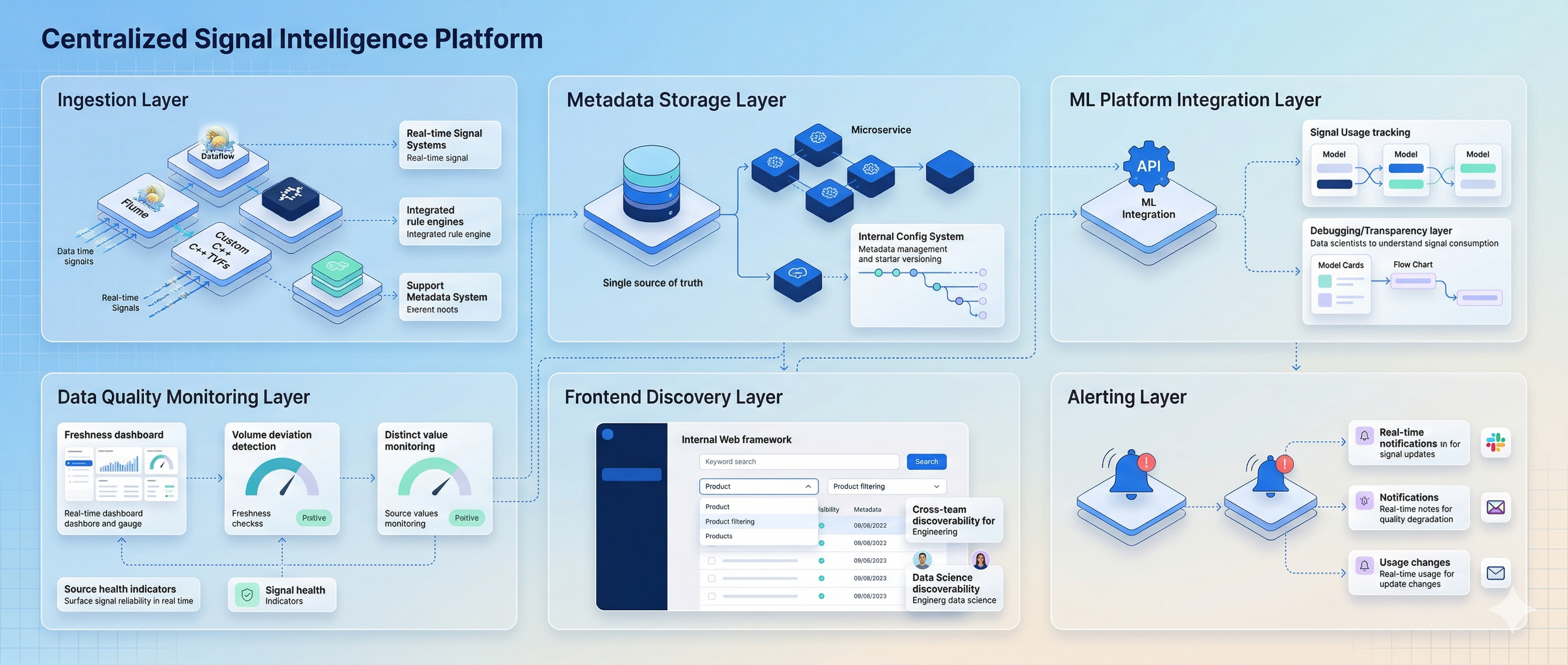
Six-Layer Signal Intelligence Platform
Signal Repo Architecture
01
Ingestion
Flume, Dataflow, and custom C++ TVFs connected to real-time signal systems. Integrated with rule engines and support metadata systems.
02
Metadata Storage
Internal database with microservices-based backend. Internal config system for metadata management and versioning.
03
ML Platform Integration
API integration with the ML platform for signal usage tracking across models. Debugging and transparency layer enabling data scientists to understand signal consumption.
04
Data Quality Monitoring
Freshness checks, volume deviation detection, and distinct value monitoring. Source health indicators surfacing signal reliability in real time.
05
Frontend Discovery
Internal web framework with keyword search, product filtering, and usage visibility. Cross-team discoverability enabling signal reuse across engineering and data science.
06
Alerting
Real-time notifications for signal updates, quality degradation, and usage changes.
Key Innovations
End-to-end signal lifecycle management: ingestion, storage, discovery, quality monitoring, and alerting in one platform
Embedded ML transparency layer making signal usage visible and debuggable for data scientists
Proactive signal quality monitoring preventing stale or degraded signals from silently impacting model performance
Cross-system signal discoverability eliminating redundant signal creation across teams
Outcomes & Impact

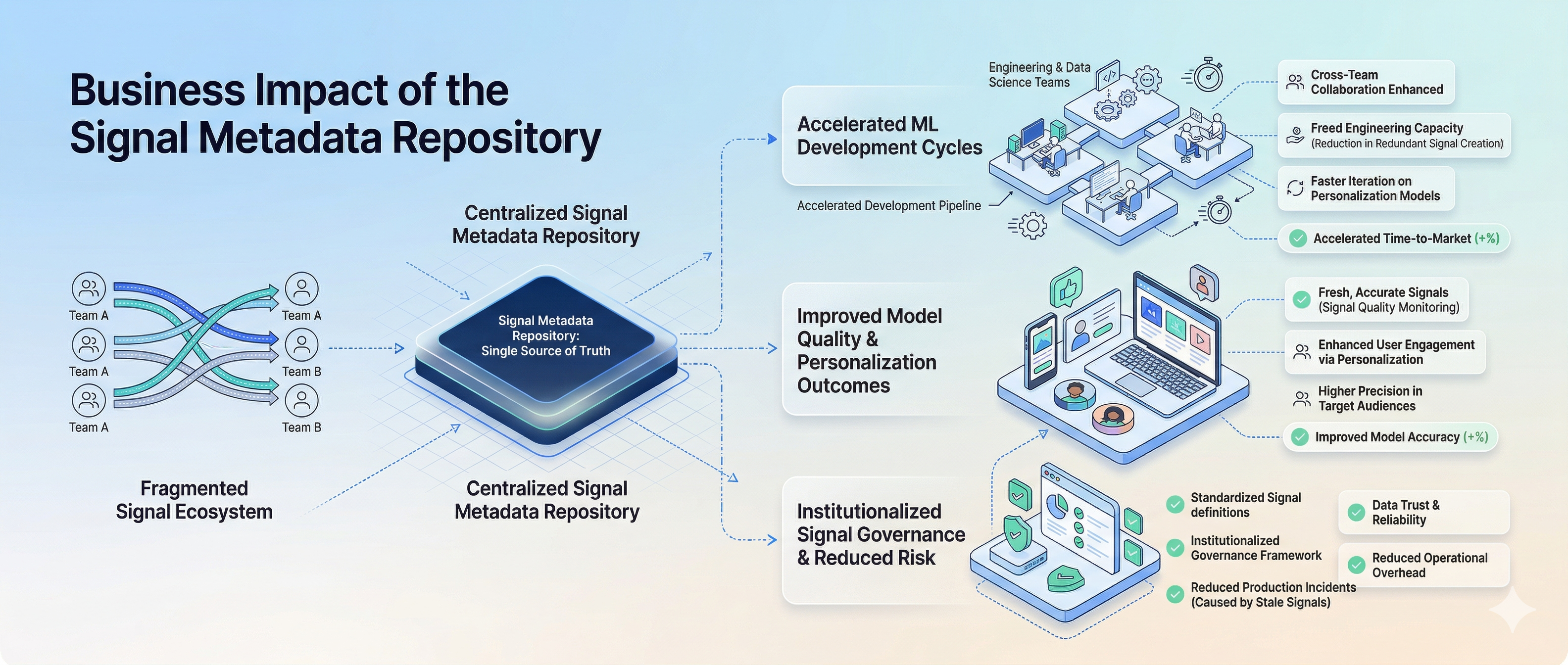
Faster ML Development. Better Models. Less Overhead.
Outcomes & Impact
Development Velocity
Accelerated ML cycles across all dependent teams
Signal Duplication
Significantly reduced redundant signal creation
Model Quality
Improved personalization outcomes via fresh, accurate signals
Production Stability
Fewer incidents from stale or misunderstood signals

The platform improved ML model quality and personalization outcomes by ensuring signals feeding production models were fresh, accurate, and well-understood. Redundant signal creation across teams was significantly reduced, freeing engineering capacity for higher-value work. Enhanced collaboration between engineering and data science accelerated ML development cycles, while institutionalized signal governance reduced production incidents caused by stale or misunderstood signals.

My Role

Platform Design, Launch, and Cross-Functional Leadership

  • Led platform design and full launch end-to-end across all six system layers
  • Mentored junior engineers across frontend, backend, and data pipeline domains
  • Collaborated cross-functionally to create RPCs enabling cross-system signal integrations
Tech Stack

Tools & Technologies

Data
Flume Dataflow C++ TVFs
Backend
Microservices Architecture Config Management System
Platform
ML Platform APIs Internal Web Framework
Relevant Capabilities

Expertise Demonstrated

← Previous · Project 01
GenAI QA Automation
Next · Project 03 →
Personalized Help Experiences